

25 June 2026 will go down in the history of the Fundació Miquel Navarro. After years of hard work, enthusiasm and institutional commitment, the Casa Taller officially opened its doors in Mislata, becoming the centre from which to preserve, study and promote the legacy of one of the most important sculptors in contemporary Spanish art.
With Miquel Navarro himself and Carlos Fernández Bielsa – the driving force behind the project and president of the foundation in his capacity as mayor of Mislata – acting as hosts, the official ceremony was also attended by the Minister for Science, Innovation and Universities, Diana Morant, representing the national government; and the Regional Secretary for Culture of the Valencian Regional Government, Marta Alonso.
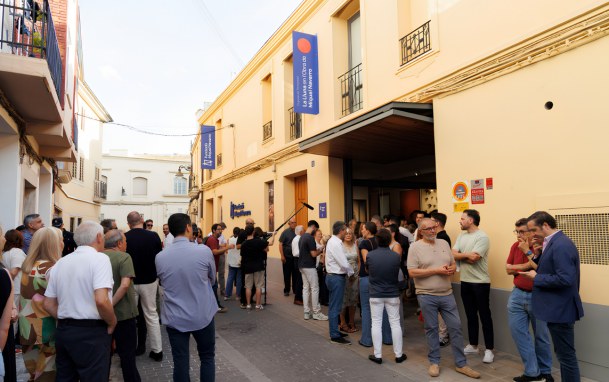
More than 300 people attended this event, which brought together representatives from various institutions, leading figures from the worlds of art, culture and politics, as well as friends, family and neighbours from Mislata, the town where Miquel Navarro was born, still lives and where he has spent much of his artistic career.
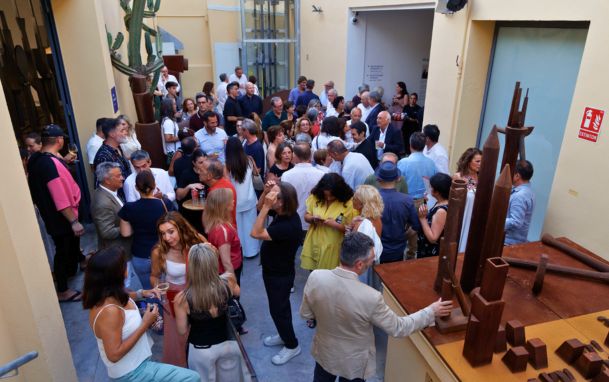
The high turnout highlighted the enormous anticipation that the opening of this centre had generated amongst those who have followed the artist’s work for decades.
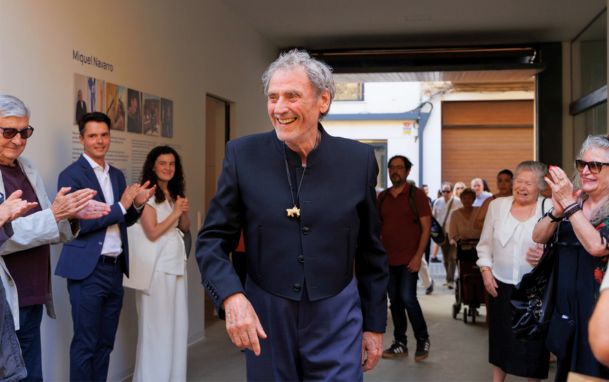
Following this official launch, the Miquel Navarro Foundation is working on developing a programme of activities and a visiting policy tailored to the venue’s specific characteristics, enabling the public to enjoy the unique nature of its museum offering once the summer is over.
A workshop and a home turned into a museum
The day began with a press preview, during which Miquel Navarro and Carlos Fernández Bielsa personally guided journalists through the premises, which have been designed to offer a comprehensive overview of more than half a century of artistic creation.
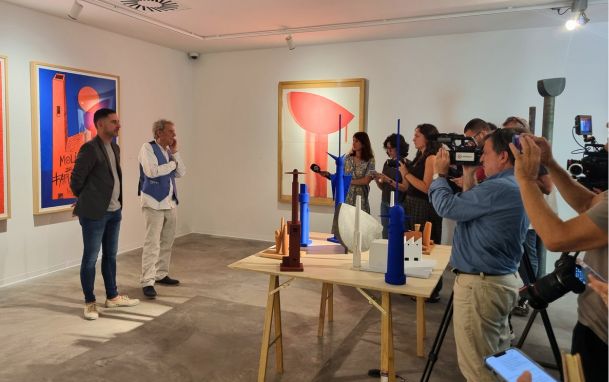
The Casa Taller is housed in the same building which, since the 1980s, has been the workplace where Miquel Navarro has conceived and produced some of his most iconic works.
Far from radically transforming the building, the refurbishment project – funded by the Diputació de València and designed by Nebot Arquitectos – has respected its industrial character, preserving the original architectural features that form part of the site’s history and the artist’s own creative legacy.
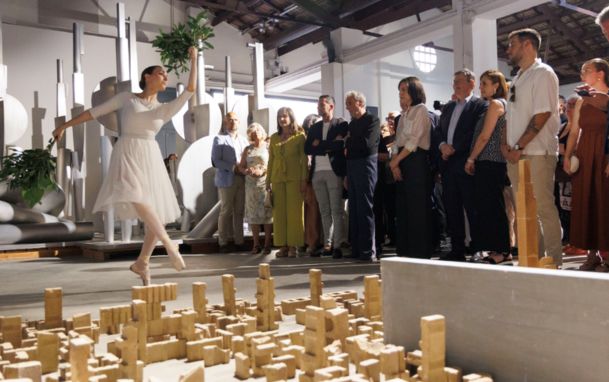
The result is a space of around 1,000 square metres that preserves the essence of the workshop whilst incorporating the museographic conditions necessary to ensure the conservation, research and dissemination of the Foundation’s collection. The refurbishment of the building has been made possible thanks to funding from the Diputació de València, as part of its commitment to the conservation of Valencia’s artistic heritage.
Over 400 works offering a journey through an entire career
The permanent collection brings together over 400 works donated by Miquel Navarro himself, allowing visitors to follow, in chronological order, the different stages of an artistic career spanning more than five decades.
Sculptures, photographs, watercolours, drawings, screen prints, paintings, collages and audiovisual works interact with one another to offer a comprehensive insight into the artist’s creative world. In addition, there is a space dedicated to research and documentation, , a gallery for temporary exhibitions —which opens its programme with the exhibition The Moon— as well as the impressive main hall, where some of the most representative monumental sculptures from his career are displayed alongside audiovisual projections and a performance piece created specifically for this space.
“May my work be brought together”
During the presentation, Miquel Navarro explained the profound personal significance of this project. For the artist, the Casa Taller offers the opportunity to keep a fundamental part of his body of work together and to ensure it can be understood in its entirety:
“May my work be brought together, may it not be lost, and may it be possible to interpret it coherently.”
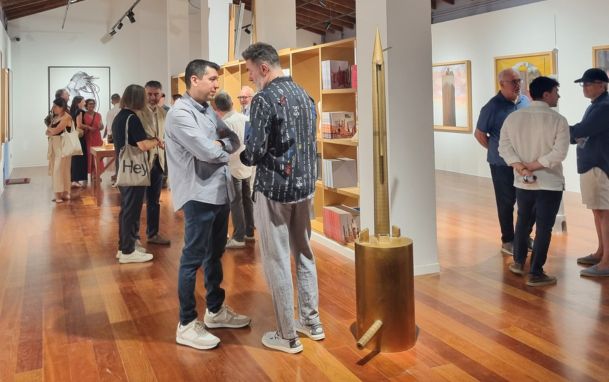
With these words, he summed up the ultimate purpose of an initiative that goes beyond the creation of a museum to become a space in which to understand the evolution of a truly unique artistic language.
The artist himself also revealed that the permanent exhibition will be updated periodically with works held in the centre’s storerooms, and that the centre will also host exhibitions by other artists, thereby fostering dialogue between different generations and artistic disciplines.
A cultural project for the future
During the opening ceremony, Carlos Fernández Bielsa highlighted the significance for Mislata and the Valencian Community of the opening of a museum dedicated to one of Spain’s most internationally renowned artists. He also emphasised the desire for other public authorities to become permanent partners in supporting the Foundation, with a view to consolidating a long-term cultural project.
La Casa Taller was thus conceived as much more than just an exhibition space. It has become a vibrant venue, designed for research, arts education, cultural events and bringing together artists and the public. A space where Miquel Navarro’s legacy remains inextricably linked to the place where it was conceived, and from which it will continue to inspire future generations.
First impressions: a space that stirs the emotions
Among the numerous comments received by the Fundació team following the opening, certain impressions were repeatedly mentioned, clearly summarising the public’s reaction to the visit. Many attendees highlighted that it is “a space full of charm”, emphasising the uniqueness of a place that preserves the artist’s legacy and transforms it into a museum experience.
Others pointed out that “it’s nothing like other museums”, highlighting precisely what makes the Casa Taller unique: its intimate atmosphere, its authenticity and the opportunity to explore Miquel Navarro’s work in the very setting in which it was created.
There were also those who said, with emotion, that “we needed something like this; Miquel deserves it”, a statement that sums up the sentiment shared by many of those present and reflects recognition of an exceptional artistic career, deeply linked to Mislata and the cultural history of our time.
For it is rare for an artist to have the opportunity to open the doors to the very place where they imagined, built and shaped their creative universe. Soon, that universe will be open to the public in Mislata.